 Reviews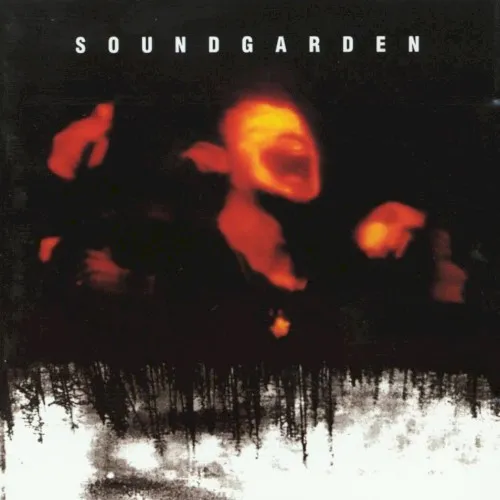
Full Review
AI-assisted, human-reviewed
Superunknown
Soundgarden
Superunknown expands Soundgarden's heaviness by making it uncertain: tuning, meter, and vocal perspective keep each riff from settling into a single emotional meaning.
Weight that will not hold still
“Let Me Drown” begins with a riff that promises solid ground. Kim Thayil and Chris Cornell push broad guitar chords against Ben Shepherd’s bass, while Matt Cameron gives the song a forceful forward motion. Cornell’s melody does something less stable. It rises over the riff, pulls away from its accents, and turns physical release into an image of erasure.
That disagreement runs through Superunknown. Soundgarden remained a heavy band, but weight no longer carried one reliable meaning. Lowered and altered tunings can suggest power, illness, suspension, or exhaustion. Irregular meters disturb a groove without announcing a technical exercise. Cornell’s voice can dominate an arrangement and still sound trapped inside it.
The album expands by making its materials uncertain. A riff is not a verdict. It is an environment whose emotional gravity can change as the band moves through it.
Four writers, one unsettled scale
Soundgarden recorded their fourth album after the touring cycle for Badmotorfinger. The band worked with producer Michael Beinhorn, recorded primarily at Bad Animals Studio in Seattle, and mixed the album with Brendan O’Brien. The standard edition contains fifteen tracks and closes with “Like Suicide.” “She Likes Surprises,” included on some editions and current services, sits outside the sequence considered here.
Writing came from across the group. Cornell, Thayil, Shepherd, and Cameron brought songs with different internal logics, while the arrangements retained a shared interest in altered tuning and displaced pulse. The variety is structural. Shepherd’s “Head Down” bends around a loose, droning guitar figure; Cameron’s “Fresh Tendrils,” co-written with Cornell, advances through carefully placed rhythmic tension; Cornell’s “Black Hole Sun” opens harmonic space that the band’s earlier attack might have filled.
The production enlarges these differences. Guitars are layered, yet individual textures remain identifiable. Bass can carry melodic movement below a fixed guitar shape. Drums have enough depth to make odd groupings feel bodily. Cornell is clearly in front without being detached from the pressure behind him.
Three forms of unstable gravity
My Wave: Irregular time becomes ease
“My Wave” organizes much of its main riff in five beats, but Cameron avoids making the meter sound counted. His backbeat and the band’s repeated accents turn asymmetry into a rolling motion. Shepherd keeps the low end direct, while the guitars leave short spaces around the riff rather than sustaining a continuous wall.
Cornell’s melody treats that uneven ground as freedom. He stretches simple phrases across the pulse and delivers the refrain with relaxed authority. The lyric asks for personal space; the meter gives that request physical form by refusing the expected path without losing its groove. Technical difference becomes posture.
The Day I Tried to Live: Seven beats resist recovery
The central guitar movement descends in half steps and unfolds across an asymmetrical meter. Each return sounds familiar but slightly delayed. Cameron makes the seven-beat shape legible through repeated placement instead of busy fills, while Shepherd’s bass adds a lower contour that prevents the riff from feeling static.
Cornell sings from the aftermath of an attempted change. His long lines rise above the descending guitar, creating a brief impression of escape before the riff pulls the song back. The chorus grows wider without becoming triumphant. Form and lyric agree on the difficulty of breaking a pattern, but the music avoids reducing that difficulty to defeat.
4th of July: Low tuning becomes atmosphere
“4th of July” moves at a pace that makes each guitar attack feel separate. The tuning drops the riff into a blurred low register; Thayil’s lead sounds hover above it like heat distortion. Cameron resists driving the song faster, placing cymbal and snare accents far enough apart for decay to become part of the rhythm.
Cornell uses a lower, less declarative delivery than on the album’s larger choruses. The apocalyptic images remain partly abstract, but the arrangement supplies their physical weather. Heaviness here is neither aggression nor release. It is duration: the sense that the air has become difficult to move through.
Meter follows emotional pressure
Cameron’s drumming is essential to the album’s range. He can make five or seven beats feel conversational because he identifies the song’s larger motion instead of emphasizing every irregular division. “Spoonman” switches its grouping while retaining a danceable thrust; “Fresh Tendrils” uses accents to make tension gather gradually. The meters alter balance, not the band’s credibility as a rock rhythm section.
The altered tunings perform a related task. They change the relationship between an open string, a fretted chord, and Cornell’s melody. On “Mailman,” low guitar weight turns the vocal’s patience into menace. “Black Hole Sun” uses a more open, circling progression; Cornell’s melody can sound inviting even as the arrangement becomes unreal. The songs do not share one grunge texture. Each establishes its own center of gravity.
Cornell’s range adds another source of instability. His high notes can cut through dense guitars, but his quieter phrasing often carries more uncertainty. The album uses vocal command to ask whether command has practical value inside these environments.
Seventy minutes of dark weather
The standard sequence is long enough for its middle-tempo weight to lose distinction. “Limo Wreck,” “Fresh Tendrils,” and “4th of July” each build a separate rhythmic and tonal world, but their placement across the second half can make heaviness feel like a general climate. The short “Kickstand” provides one release; more changes of scale might have made the surrounding songs register more sharply.
Cornell’s lyrics also vary in precision. “Fell on Black Days” turns a plain phrase into a careful account of dread that arrives without a visible cause. Elsewhere, images of poison, death, and damaged perception accumulate faster than the speakers acquire context. The arrangements can be exact about how distress feels while the words leave its circumstances unlocated.
That abstraction is sometimes the point, especially on “4th of July.” Across a seventy- minute record, however, recurring darkness can connect songs the music has worked hard to differentiate.
The riff remains an open question
Superunknown does not abandon Soundgarden’s weight. It subjects weight to more uses. Alternate tunings give each song a different floor, Cameron’s meters alter the listener’s balance, and Cornell’s melodies refuse to accept the riff’s first emotional answer.
The long sequence occasionally turns those distinctions into weather. Some lyrics rely on dark images where the music offers more exact information. Three songs resist that blur especially well. “My Wave” makes asymmetry feel loose, “The Day I Tried to Live” makes repetition feel contested, and “4th of July” makes low tuning feel environmental.
Heaviness becomes a question about space, time, and perspective. Soundgarden can still strike with enormous force, but force no longer tells the listener what the song means.
The argument
Strengths and limits
Strengths
- Altered tunings give individual songs distinct physical and harmonic centers.
- Matt Cameron makes asymmetrical meters feel expressive rather than technical.
Limits
- The long sequence repeats its middle-tempo weight after the album has established it.
- Several lyrics keep emotional crisis abstract where the arrangements are highly specific.
Further reading: Superunknown on Soundgarden's official site
Documentation
Sources
- Superunknown album history and track listing, Soundgarden. Accessed July 31, 2026.
- Superunknown original release and credits, MusicBrainz. Accessed July 31, 2026.
- Superunknown US album formats, sequence, and credits, On A&M Records. Accessed July 31, 2026.
- Chris Cornell and Kim Thayil dissect Superunknown, Guitar World. Accessed July 31, 2026.
Album artwork remains the property of its respective rights holders. It is reproduced at limited resolution on this review page for identification and critical context.