 Reviews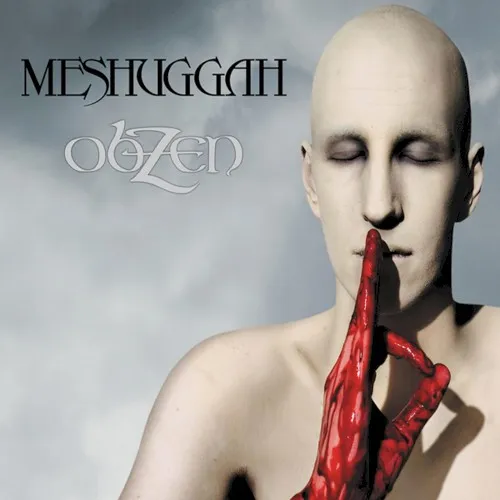
Full Review
AI-assisted, human-reviewed
obZen
Meshuggah
obZen keeps an underlying pulse beneath its shifting patterns, making rhythmic disorientation physical as the listener works to recover the beat.
The grid is not the groove
obZen often produces two bodily responses at once. The low guitars and kick drums invite a direct head movement; the placement of their attacks makes that movement miss its expected landing. Meshuggah does not create this effect by abandoning regular meter. The songs are largely organized in firm groups of 4/4 bars. Shorter riff patterns cycle across that frame, fall out of alignment with it, and are cut off when the larger section reaches its boundary.
That distinction separates the album’s force from a display of difficult counting. A listener can follow the cymbal pulse or backbeat without decoding every guitar grouping. Another can attend to the rotating low pattern and feel the bar line recede. The music supports both hearings, and friction between them creates the groove.
The production makes the argument unusually stark. Guitar, bass, and bass drum share a dry, sharply separated attack; Jens Kidman’s voice works more like another percussive layer than a melodic release. Each sound helps locate an event, even when the relationship among events remains uncertain. obZen’s machine-like precision makes the body search for the organizing pulse inside it.
Speed reveals where the floor is
The opening sequence teaches that listening method at high speed. “Combustion,” “Electric Red,” and “Bleed” do not gradually ease the ear into Meshuggah’s rhythmic language. They offer different kinds of orientation immediately: thrash velocity, repeated blocks, and a drum pattern whose physical difficulty became part of the album’s history.
Combustion: The downbeat arrives late
“Combustion” starts with a guitar figure that seems to declare its own accent pattern. When the full drum part settles in, snare and cymbal make a different hierarchy audible. What first sounded like the beginning of the figure can be re-heard as an upbeat. The riff has not changed; the listener’s location inside it has.
The song uses speed to prevent that correction from becoming an academic puzzle. Guitar picking and kick drum retain the forward bite of thrash metal, while the backbeat supplies a floor beneath their displacement. Its compact form matters. Rather than exhausting the illusion, “Combustion” establishes that rhythmic understanding on this album may arrive retroactively.
Bleed: One pulse passes between instruments
“Bleed” turns a rapid herta figure into sustained pressure. The low guitars double the double-kick pattern so closely that riff and drum technique become one composite attack. For roughly the first minute and a quarter, cymbal quarters state the 4/4 pulse with unusual clarity. Later, that guide blurs: cymbals move to denser strokes, kick and guitars push their groupings forward, and vocal or lead-guitar entries briefly assume the work of orientation.
Across seven minutes, the repeated cell stays recognizable while its position in the texture changes. At some moments it is the surface; at others it becomes the ground beneath a lead line or vocal phrase. Tomas Haake’s control lets the difficult part become expressive by changing which layer allows the listener to feel the song’s larger shape.
Slowness exposes the cut
Lethargica: Expectation ends at the wall
“Lethargica” slows the album without making its structure simpler. Its opening guitar riff contains a 23-beat pattern that can be heard as four related groups: 5, then 6, 6, and 6. The internal question-and-answer shape is clear enough to create expectation. Across the larger 16-bar section, however, the riff completes twice and begins again only to be stopped before its final group. The vocal entrance marks the formal boundary, not the completion of the smaller cycle.
That cut is the source of the lurch. Meshuggah lets repetition teach the ear what should come next, then gives the authority to the larger frame. Later, a spacious pause and an extremely slow return magnify the same low-register material. With fewer attacks, the gaps around them become part of the weight. “Lethargica” demonstrates that heaviness here is not a function of speed or density alone. It comes from knowing that a pattern can be halted while its momentum is still active.
The long form makes control audible
Dancers to a Discordant System: Endurance replaces surprise
The closing “Dancers to a Discordant System” stretches the album’s method past nine minutes. Its recurring low figures lean against a plainly felt drum framework, while Kidman’s evenly projected phrases describe submission to an order that presents itself as freedom. The performance does not need a sudden metrical reveal. It accumulates authority through return.
Register supplies contrast that rhythm guitar and voice often withhold. Fredrik Thordendal’s lead work moves above the locked low end in thin, bending lines whose loose contour sounds almost unstable against the exact attacks below. The solo does not break the system; it shows how much deviation the system can contain. As the main figures return, the length of the song turns recognition into endurance. The listener knows the mechanism and still has to inhabit it.
“Dancers” concludes the album by removing surprise and asking whether repetition itself can remain coercive. Where “Combustion” changes the perceived beginning of a riff, the closer lets the pulse continue after its logic has become familiar.
One sound cannot make every distinction
obZen’s precision also narrows it. Across “Electric Red,” the title track, “This Spiteful Snake,” “Pineal Gland Optics,” and “Pravus,” changes in attack pattern do more differentiating work than timbre, vocal register, or dynamics. The consistent guitar and drum treatment lets rhythmic details remain legible, but it can make successive songs feel like rooms built from the same hard surfaces.
Haake later identified that uniformity as a limitation of obZen and Koloss: using the same basic sound across songs did not always serve slower and faster material equally. The album itself supports the criticism. “Lethargica” gains scale through tempo and space, and “Dancers” gains it through duration and lead guitar, yet the middle run offers fewer changes in color. Kidman’s deliberately narrow delivery strengthens the image of impersonal control while reducing another possible source of contrast.
The exact production system makes different complexities too equivalent. A small shift in drum ambience, guitar texture, or vocal distance could have clarified the individual character already present in the writing.
The listener becomes the moving part
obZen maintains order more firmly than its surface first suggests. Riffs rotate, accents displace their apparent beginnings, and cycles are denied completion, but the larger bar structure keeps exerting control. The music’s intelligence lies in making that hidden order available to the body. One need not count a 23-beat pattern to feel the moment when it is cut short.
The album’s limited palette is a real cost of this clarity. It favors a single severe sound over the wider textural identities its songs could sustain. Cymbal, backbeat, voice, and lead guitar take turns showing where the floor is; guitar and kick drum keep trying to pull it elsewhere. The system does not move. The listener does—and the effort of recovering the pulse becomes the album’s central pleasure.
The argument
Strengths and limits
Strengths
- Stable large-scale pulse turns displaced guitar and drum patterns into physical groove.
- Distinct rhythmic designs remain audible through exceptionally controlled ensemble attacks.
Limits
- Uniform production and vocal register reduce contrast across the album's middle stretch.
Further reading: Meshuggah official discography
Documentation
Sources
- obZen release group and editions, MusicBrainz. Accessed August 7, 2026.
- So Complete in Beautiful Deformity: Unexpected Beginnings and Rotated Riffs in Meshuggah's obZen, Music Theory Online. Accessed August 7, 2026.
- Tomas Haake discusses obZen and Bleed, FaceCulture. Accessed August 7, 2026.
- Tomas Haake of Meshuggah — extended interview, Decibel Magazine. Accessed August 7, 2026.
- Remastered 15-year anniversary edition of obZen, Meshuggah. Accessed August 7, 2026.
Album artwork remains the property of its respective rights holders. It is reproduced at limited resolution on this review page for identification and critical context.