 Reviews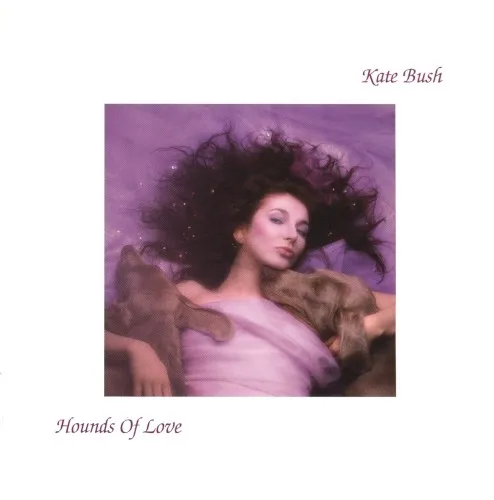
Hounds of Love
Kate Bush
Hounds of Love treats production as point of view: rhythm fixes each scene in place while voices, samples, and edits change who can see it.
AI-assisted, human-reviewed
The studio becomes a point of view
Hounds of Love is often divided into an accessible first side and an experimental second one. The vinyl supports that description: five separate songs sit under the album title, while seven connected pieces form The Ninth Wave. Yet the split can hide what the two sides share. Both use the studio to decide where the listener stands inside a song.
Kate Bush began the record at home with an eight-track setup, piano, Fairlight sampler, and a rhythm programmed by Del Palmer. The completed album sounds far larger than that room, but its detail rarely feels added for display. A repeated drum pattern fixes one perspective. A doubled or processed voice places another character nearby. A hard edit can move from a body in danger to a memory, an accusation, or a view from above.
That hierarchy keeps the album’s elaborate production readable. Bush does not ask every sound to carry equal weight. Percussion establishes the ground; voices and sampled events alter the scene above it. Side one compresses that method into songs that can stand alone. The Ninth Wave removes the stable ground and tests whether the same signs can guide a continuous drama.
Side one moves on repeated pressure
The first five songs approach fear, desire, protection, escape, and loss through different arrangements, but they share a preference for insistence. Short harmonic cycles and recurring percussion leave little neutral space. The songs move forward while their narrators remain caught inside one problem.
That constraint keeps the Fairlight and layered vocals from turning into period decoration. A sampled texture matters because it presses against a pattern already in motion. Bush can widen the arrangement without abandoning the emotional position that the opening bars established.
Running Up That Hill: A bargain held inside the beat
“Running Up That Hill” begins with a clipped synthetic figure and a drum pattern that seems to run without gaining ground. The rhythm is forceful but not triumphant. It gives the proposed exchange between two lovers the character of repeated effort rather than a single revelation.
Bush’s lead vocal moves from contained phrases to longer, more urgent lines. Backing voices gather around it, yet the basic pulse refuses to yield. That pulse tests the song’s wish directly: perspective might change, but neither person can simply step outside the body and history that shaped the conflict. The arrangement grows because the request becomes more desperate, not because a chorus needs a conventional lift.
Mother Stands for Comfort: Protection without warmth
“Mother Stands for Comfort” slows the side without offering rest. Its fretless bass slides between notes as if avoiding a firm outline, while spare percussion leaves gaps around Bush’s controlled vocal. The mother in the song protects her child despite knowing what he has done. The arrangement makes that shelter feel enclosed rather than tender.
Where “Running Up That Hill” piles effort onto a fixed beat, this song withholds impact. Its low register and empty spaces turn loyalty into secrecy. Placed after the open-air excitement of “The Big Sky,” it also proves that the album’s scale is not a simple climb toward bigger choruses. Production can narrow the field until protection resembles a room with no exit.
The boundary is a cut, not a reset
“Cloudbusting” ends the first side with a marching pattern, massed voices, and a string figure that keeps returning to the same upward motion. The sound gives private memory a public shape. It is the side’s most complete union of repetition and expansion: each new layer enlarges the scene while the underlying step remains clear.
Then “And Dream of Sheep” begins The Ninth Wave with piano, a quiet vocal, and the suggestion of a radio signal. The contrast is sharp, but it does not introduce a wholly new language. Bush again establishes a pulse and places fragments of another world around it. What changes is reliability. The narrator is now alone in water, drifting toward sleep, and no sound can be assumed to come from the same physical space.
The side break acts as a cut between viewpoints. Side one trains the ear to follow recurring signals; side two makes those signals uncertain. A voice might be remembered, imagined, transmitted, or judging. Continuity depends less on a shared key or tempo than on the listener learning how each new sound locates the person at the center.
The Ninth Wave removes stable ground
The suite advances by changing levels of consciousness rather than by sustaining one musical build. “Under Ice” turns the water into a frozen surface and splits the narrator between observer and endangered body. Short string figures and tightly grouped vocals make the scene feel both rapid and suspended. The following track shatters even that unstable frame.
Waking the Witch: Judgment built from edits
“Waking the Witch” opens with familiar voices urging the sleeper to wake. Their brief, dry phrases resemble messages entering from outside the dream. A sudden percussive blow then changes the scale. Harsh electronic rhythm, altered voices, and accusatory fragments assemble a trial without placing the judges in one believable room.
The edit is the dramatic mechanism. The narrator does not walk from sleep into danger; the album cuts away the boundary between them. Pitch-shifted voices reduce language to authority and threat, while Bush’s responses fight for space inside the mix. The track’s density works because its parts do not merge smoothly. Their collisions reproduce a mind trying to organize panic.
Hello Earth: The body heard from a distance
“Hello Earth” reverses that pressure. Slow piano chords and a restrained lead vocal make the narrator seem to look down on the world from outside herself. The choral passage, adapted for the recording with Richard Hickox’s singers, does not function as a grand chorus. It enters like a weather system: human voices with enough distance to sound impersonal.
The song alternates intimacy and scale instead of joining them. Bush can sound close to the microphone, then small beside the choir and the surrounding effects. That shift turns a production choice into perspective. The threatened body remains the subject, but the scene is briefly heard from a place where one life seems almost invisible.
Theater sometimes labels too much
Bush’s staging is so exact that the less flexible moments stand out. “The Big Sky” has a buoyant rhythm and a chorus designed for accumulation, but its later vocal exclamations and repeated surges enlarge a feeling that is already clear. Motion becomes confirmation. The track is pleasurable, though it has less internal argument than the songs around it.
“Jig of Life” presents a different problem. Its fiddle, driving folk rhythm, and older voice give the future a bodily urgency after the dislocation of “Watching You Without Me.” The scene needs that intervention: the narrator is confronted by the life she will lose if she stops fighting. But the shift also labels the dramatic turn more plainly than the suite’s ambiguous edits. Tradition, age, and survival arrive together as an emphatic package.
Vivid signs carry their own risk. When every texture has a dramatic job, a sign can become too legible or continue after it has completed that job. The record is strongest when its layers alter one another rather than point in the same direction.
The Morning Fog restores ordinary weight
After the height and distance of “Hello Earth,” “The Morning Fog” returns with guitar, bass, bright percussion, and voices that sound recognizably social. The transition does not solve every event in the suite. It restores weight, touch, and the possibility of speaking directly to other people.
That modest scale is essential. A larger finale would turn survival into spectacle. Bush instead lets warmth appear through a comparatively open band arrangement. The recurring rhythm now carries movement rather than confinement, and the layered voices sound like company instead of memory or judgment.
The ending joins the two halves through rhythm. Side one shows how a fixed pulse can hold contradictory feelings inside a compact song. The Ninth Wave breaks that security apart, changes viewpoint through edits and vocal staging, then earns its way back to a human beat. Bush gives each studio effect a dramatic position instead of relying on a shared 1980s surface for coherence. The production does not decorate the story. It decides where the story can be heard from.
Strengths and limits
Strengths
- Repeated percussion gives dense studio arrangements a clear dramatic center.
- Layered voices and edits turn changes of perspective into audible events.
Limits
- The Big Sky extends its exhilaration after the arrangement has made its point.
- Jig of Life marks its dramatic turn more bluntly than the surrounding suite.
Further reading: Kate Bush induction essay
Sources
- Hounds of Love release group, MusicBrainz. Accessed August 12, 2026.
- Hounds of Love, Kate Bush. Accessed August 12, 2026.
- About Hounds of Love and interview, Gaffaweb Kate Bush archive. Accessed August 12, 2026.
- Kate Bush rules, OK?, The Guardian. Accessed August 12, 2026.
Album artwork remains the property of its respective rights holders. It is reproduced at limited resolution on this review page for identification and critical context.