 Reviews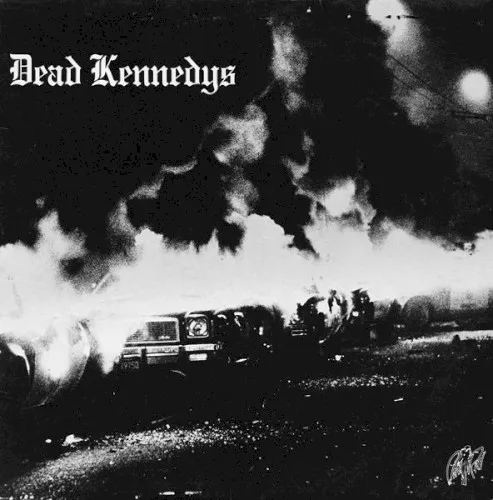
Full Review
AI-assisted, human-reviewed
Fresh Fruit for Rotting Vegetables
Dead Kennedys
Fresh Fruit for Rotting Vegetables works because its satire is built into the band's timing: guitar, rhythm, and vocal character reveal authority as a nervous performance.
The smirk has a rhythm
“Kill the Poor” opens with ceremony. Ted’s drums imitate a military cadence, Klaus Flouride’s bass holds a plain march, and East Bay Ray lets a bright guitar figure hover above them. Jello Biafra enters as a public official pleased with his own solution. The band gives the speaker enough space to display his manners.
When the chorus accelerates, the satire becomes physical. The polished announcement turns into a communal shout, as if cruelty has passed easily from policy to entertainment. Tempo, guitar tone, and vocal character show authority losing its composure.
Arrangement carries the jokes. A surf line makes paranoia buoyant; a sudden stop catches a slogan with its mask off; Biafra lengthens a vowel until confidence becomes panic. Satire lives in the timing.
San Francisco through a warped lens
Dead Kennedys recorded their debut around Biafra, East Bay Ray, Flouride, and drummer Bruce Slesinger, credited as Ted. Carlos Cadona, known as 6025, also appears on “Ill in the Head.” East Bay Ray and Oliver DiCicco handled the production. The original UK Cherry Red LP contains fourteen tracks and runs just under thirty-three minutes. Later editions often alter the sequence or add material, including “Police Truck”; this review follows the original album ending with “Viva Las Vegas.”
The band’s range was wider than a single hardcore attack. East Bay Ray uses echoing figures associated with surf and spy themes, then cuts them against short distorted chords. Flouride’s bass remains melodic enough to move independently, while Ted can switch from a firm backbeat to a rolling, martial push. The space between those parts gives Biafra room to act.
His vibrato and exaggerated diction are central. Politician, suburban vigilante, tourist, and damaged consumer arrive as characters whose certainty is already unstable. The music supplies the room in which each one fails.
Three public voices break character
California Über Alles: The campaign speech tightens
The song begins with toms and bass circling a minor-key guitar figure. The tempo is controlled, closer to a procession than a sprint. Biafra shapes each line like a candidate delivering a warning as reassurance. His vibrato widens at the ends of phrases, making composure sound rehearsed.
The band increases pressure without abandoning the central figure. Guitar noise thickens, the drums become more direct, and the repeated title changes from slogan to threat. The fictional authoritarian future is broad caricature, but its musical observation is exact: political calm can control the rate at which fear enters the room.
Holiday in Cambodia: The guitar refuses moral comfort
An isolated, descending guitar pattern creates suspicion before the lyric identifies its target. Flouride and Ted enter with a groove that leaves the guitar’s sour edges audible. Biafra addresses privileged rebellion in a voice shifting between mock welcome and open contempt.
The chorus expands into a blunt group response. By placing a real history of mass violence inside an attack on Western complacency, the song risks turning suffering into argumentative scenery. The arrangement is strongest where the guitar keeps that discomfort unresolved instead of allowing the chorus to behave like a victory.
Chemical Warfare: Leisure turns into procedure
“Chemical Warfare” moves through several settings in miniature. Fast punk gives way to a country-club interlude; spoken detail becomes a shouted hook; guitar fills shift from clipped attack to mocking decoration. The transitions enact the collision of elite leisure and organized violence.
Biafra’s character treats access to poison as another consumer privilege. Ted’s changes keep the narrative legible, while East Bay Ray alters the social setting with tone rather than explanation. The song is funniest when the band sounds most orderly. Its target is the ease with which destructive procedure can appear normal.
Guitar as scene direction
East Bay Ray gives each speech a distinct setting. His guitar establishes place quickly: ominous arpeggio, surf twang, terse chord, cheap fanfare. On “Let’s Lynch the Landlord,” the bouncing line makes group violence horribly sociable. “Drug Me” uses speed and repetition to deny the comfort its title demands.
The rhythm section is equally disciplined. Flouride often supplies the line a listener can follow while guitar and voice exaggerate. Ted’s drumming keeps abrupt turns clean and gives the slower openings real weight. Because the band can wait, acceleration has meaning. Because it can groove, a shouted chorus need not carry every point.
The precision extends the satire beyond the words. The characters reveal themselves through the music they imagine should accompany them.
Caricature reaches its border
Biafra’s theater can close a subject too early. Once a character has been assigned the same nasal confidence and exposed as a hypocrite, the song has limited room to discover a second motive. “I Kill Children” pushes provocation so hard that the title and performance dominate the structural joke. Repetition does not make the analysis more exact.
“Holiday in Cambodia” has a harder limit. Its critique of sheltered radical pose is focused, yet Cambodia can become the instrument used to discipline someone else. The suffering invoked receives less detail than the Western character being mocked. Satire identifies complacency while reproducing distance from its consequences.
The album’s speed helps weaker simplifications pass. That economy is part of punk’s force, but it also means a devastating premise may receive only one angle.
Laughter with no safe audience
Fresh Fruit for Rotting Vegetables coheres because the band treats satire as a musical problem. East Bay Ray frames each scene, Flouride and Ted control its movement, and Biafra performs language until its hidden appetite becomes audible. The record attacks official reassurance by showing how quickly it can become chant, threat, or joke.
Its limits come from the same method. A hard caricature can mistake recognition for full understanding, and historical violence sometimes becomes a prop in an argument aimed elsewhere. The sharper tracks leave friction inside the joke. Their guitar lines stay uneasy, their rhythms revise the speaker, and their choruses implicate the people shouting along.
The listener never stands safely beside the satirist. Laughter becomes part of the crowd noise before the band changes the beat underneath it.
The argument
Strengths and limits
Strengths
- East Bay Ray's guitar gives each satire a distinct setting without slowing the record.
- Jello Biafra's vocal characters expose the fear beneath official language.
Limits
- Some targets are reduced to cartoons before the songs can examine their contradictions.
- The repeated sneer can make different forms of political violence sound too similar.
Further reading: Fresh Fruit original release record
Documentation
Sources
- Fresh Fruit for Rotting Vegetables original UK release, MusicBrainz. Accessed July 31, 2026.
- Fresh Fruit for Rotting Vegetables editions and track counts, MusicBrainz. Accessed July 31, 2026.
- Fresh Fruit for Rotting Vegetables digital edition and credits, Qobuz. Accessed July 31, 2026.
- East Bay Ray on the guitar sound of Fresh Fruit, Guitar World. Accessed July 31, 2026.
Album artwork remains the property of its respective rights holders. It is reproduced at limited resolution on this review page for identification and critical context.