 Reviews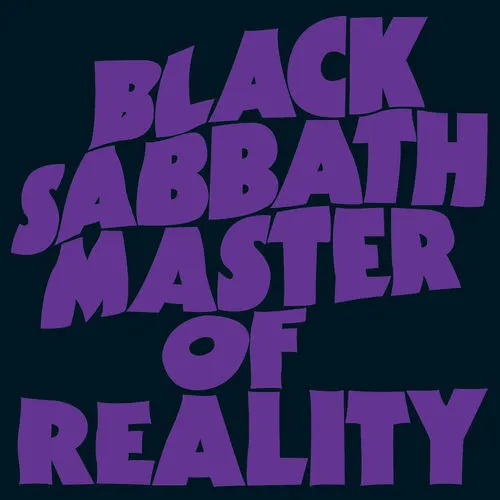
Master of Reality
Black Sabbath
Master of Reality makes weight physical through low tuning and blunt repetition, then leaves Bill Ward and Geezer Butler enough room to move inside the riffs.
AI-assisted, human-reviewed
Weight before explanation
The first sound on Master of Reality is not a guitar. It is Tony Iommi coughing after taking a pull on a joint, a bit of studio reality that turns into the count-in for “Sweet Leaf.” Then the band lands on a riff that seems almost too plain to sustain a song: a low bend, a short descent, a pause. The force comes from the pause as much as the notes. Geezer Butler thickens Iommi’s bend, then moves around the guitar’s edges, while Bill Ward places cymbal strikes and fills where a less alert drummer might settle for a square backbeat.
Low tuning gives the album its register, but Ward and Butler determine how that register moves. Sabbath treats a riff as a floor plan. The drums decide how quickly the listener crosses it; the bass opens side passages; Ozzy Osbourne’s melody traces the main wall in clear, singable lines.
“Sweet Leaf” also states a recurring tension. The music sounds severe, but the band is not solemn about its materials. The cough is funny. The lyric is direct enough to border on a novelty song. The performance refuses novelty because the central riff has real consequence: each return feels heavier after the brief, faster middle section. Speed is not the destination. It is a change in pressure that sends the song back to its main figure with renewed force.
A new low register
“After Forever” complicates the album’s reputation for monolithic darkness. Butler’s lyric addresses belief and doubt in blunt questions, while the music moves through more sections than the opening track. Iommi alternates compact chord shapes with a brighter, almost impatient figure. Ward follows each shift rather than flattening them into a single groove. The result is argumentative: the song keeps changing its footing while the vocal asks where conviction comes from.
The directness can be awkward. Lines land as declarations where another writer might leave ambiguity. But that lack of polish fits the arrangement. Sabbath is not building a mist around the subject. The band sets a question against a riff and lets both stand in hard outline. Osbourne’s doubled vocal helps. Its narrow melodic range makes the words feel communal rather than privately confessional, as if a room is testing the questions together.
The song also shows how economical the production is. Guitar overdubs add emphasis, but they do not turn the riff into a wall of indistinct sound. Bass, guitar, and drums retain separate contours. That separation is crucial on an album built from low frequencies. Without it, heaviness would collapse into blur.
Four tests of the method
Sweet Leaf: Weight begins in the pause
The cough is Tony Iommi’s, caught on tape after he inhaled from a joint; Rhino’s account confirms that the band kept it deliberately because it introduces a song about marijuana. The edit turns breath, cough, and count-in into meter before the riff arrives.
The main figure contains a low bend, a short fall, and an empty beat. Ward does not fill that gap mechanically. He varies the cymbal weight and lets his kick answer the guitar, while Butler alternates between doubling Iommi and pushing past him. The faster middle passage briefly removes the drag. When the opening riff returns, it feels heavier because the band has changed the listener’s internal tempo.
Children of the Grave: Low tuning learns to run
Iommi and Butler tuned down three semitones for this album. On “Children of the Grave,” Ward’s rolling tom pattern gives that low register forward thrust. The guitar can sustain thick, repeated chords without stopping the track because the drums keep pulling the bar ahead.
Osbourne’s long, narrow vocal line moves differently from the instruments beneath it. He does not try to match every accent, so the warning remains intelligible while the band churns. In the closing section, overdubbed percussion and whispers drain the charge rather than supplying a larger climax. The coda is effective as an afterimage, though it is less developed than the main performance.
Lord of This World: The rhythm section tilts the mass
The opening riff lands behind the beat and risks becoming inert. Butler prevents that by letting the bass scrape around the guitar’s contour instead of copying it throughout. Ward uses compact fills at the ends of phrases, shifting the center of gravity just before the figure repeats. Much of the movement is below Osbourne’s plain vocal line.
During Iommi’s solo, the rhythm guitar keeps the low figure present and the bass continues to argue with it. A small amount of material stays active because the four parts do not agree on exactly how it should sit.
Into the Void: The riff becomes an environment
“Into the Void” delays its verse through a sequence of distinct introductions. The first figure crawls; the next adds lift; a stop-start passage narrows the motion before the vocal enters. The riffs form a sequence, each teaching the listener a different gait inside the same low-tuned register.
Once Osbourne arrives, his melody closely shadows the guitar. Voice and riff seem to occupy one object, appropriate for a lyric about escaping a damaged world without any convincing sense of escape in the music. The final returns draw more from persistence than transformation. That is the song’s limit, but Ward and Butler keep the repeated surface alive long enough for the environment to hold.
What economy makes possible
The album’s decisive strength is proportion. Ward and Butler keep Iommi’s lowered guitar from becoming a static wall. Their parts make “Sweet Leaf” lurch, “Children of the Grave” run, and “Lord of This World” lean backward even though all three depend on compact, repeated figures.
“Embryo” and “Orchid” also perform real sequencing work. Their acoustic attacks decay quickly and reset the ear before the amplified low end returns. The interludes are small, but the album understands where to place them.
Where austerity becomes repetition
Those instrumentals are slight when removed from the sequence. “Embryo” barely has time to state its figure, and “Orchid” develops touch more than form. They function better as editing decisions than as complete compositions.
“Solitude” reveals a different constraint. The exposed voice and flute add vulnerability, but the arrangement establishes its lament early and then sustains it. Osbourne’s direct melodies often help the riffs read clearly; here that plainness leaves little room for the mood to change.
The riff as a complete world
Master of Reality made lower tuning useful because the band knew what to do around it. Empty beats, moving bass, and drums that refuse a square backbeat give the riffs different kinds of weight. The album’s smaller pieces depend heavily on placement, and its longest returns sometimes outlast their development. Here, heaviness comes from the relationship between mass and room.
Strengths and limits
Strengths
- The rhythm section keeps low, repetitive riffs from becoming inert.
- Acoustic interludes give the album proportion instead of merely interrupting it.
Limits
- The brief interludes can register as connective tissue rather than complete pieces.
- Solitude closes through duration more than through a genuinely new final argument.
Sources
- Master of Reality album details and track list, Black Sabbath. Accessed July 26, 2026.
- The Complete Studio Albums 1970–1978, Black Sabbath. Accessed July 26, 2026.
- Doom Generation: Inside Black Sabbath's Master of Reality, Rhino. Accessed July 26, 2026.
Album artwork remains the property of its respective rights holders. It is reproduced at limited resolution on this review page for identification and critical context.